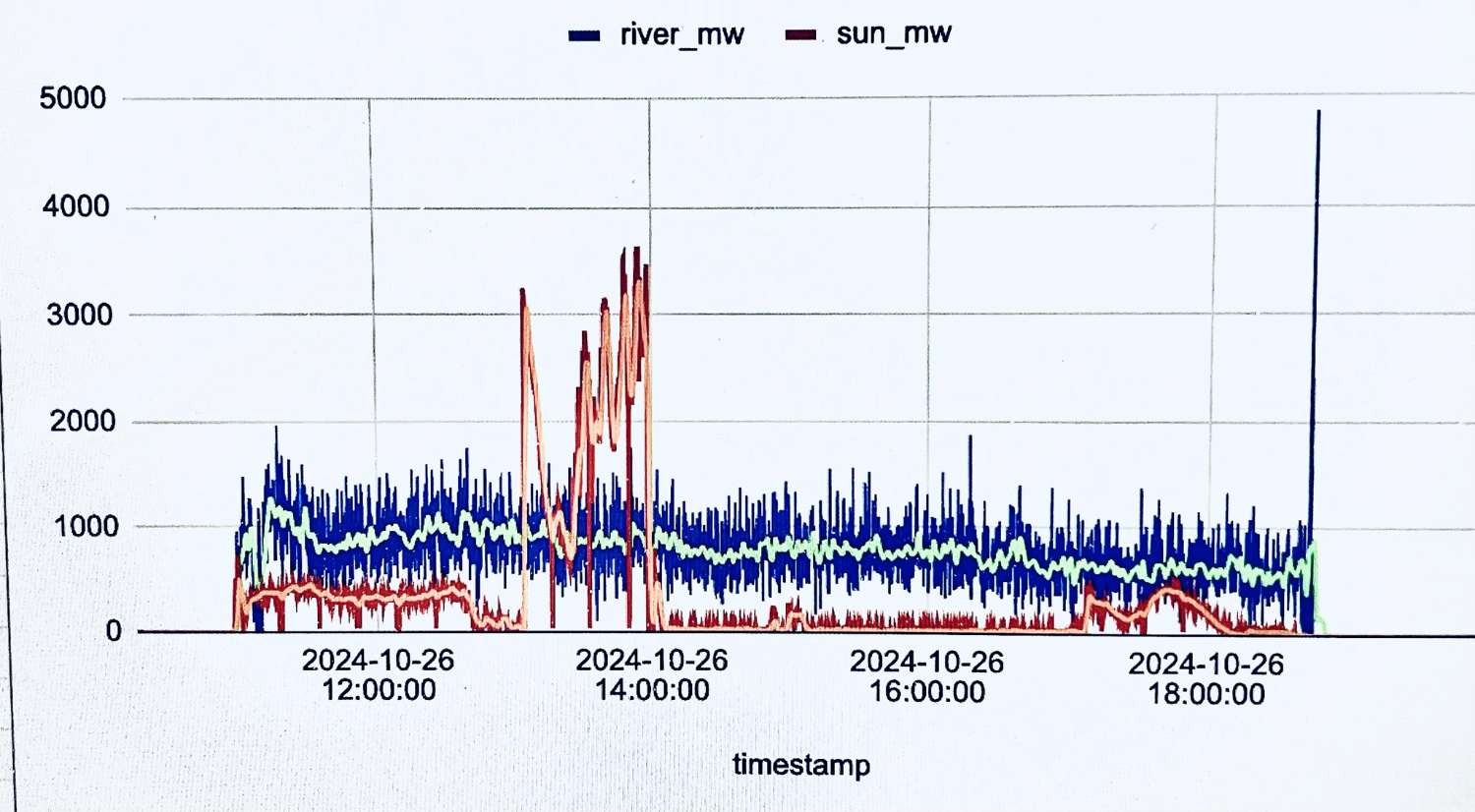
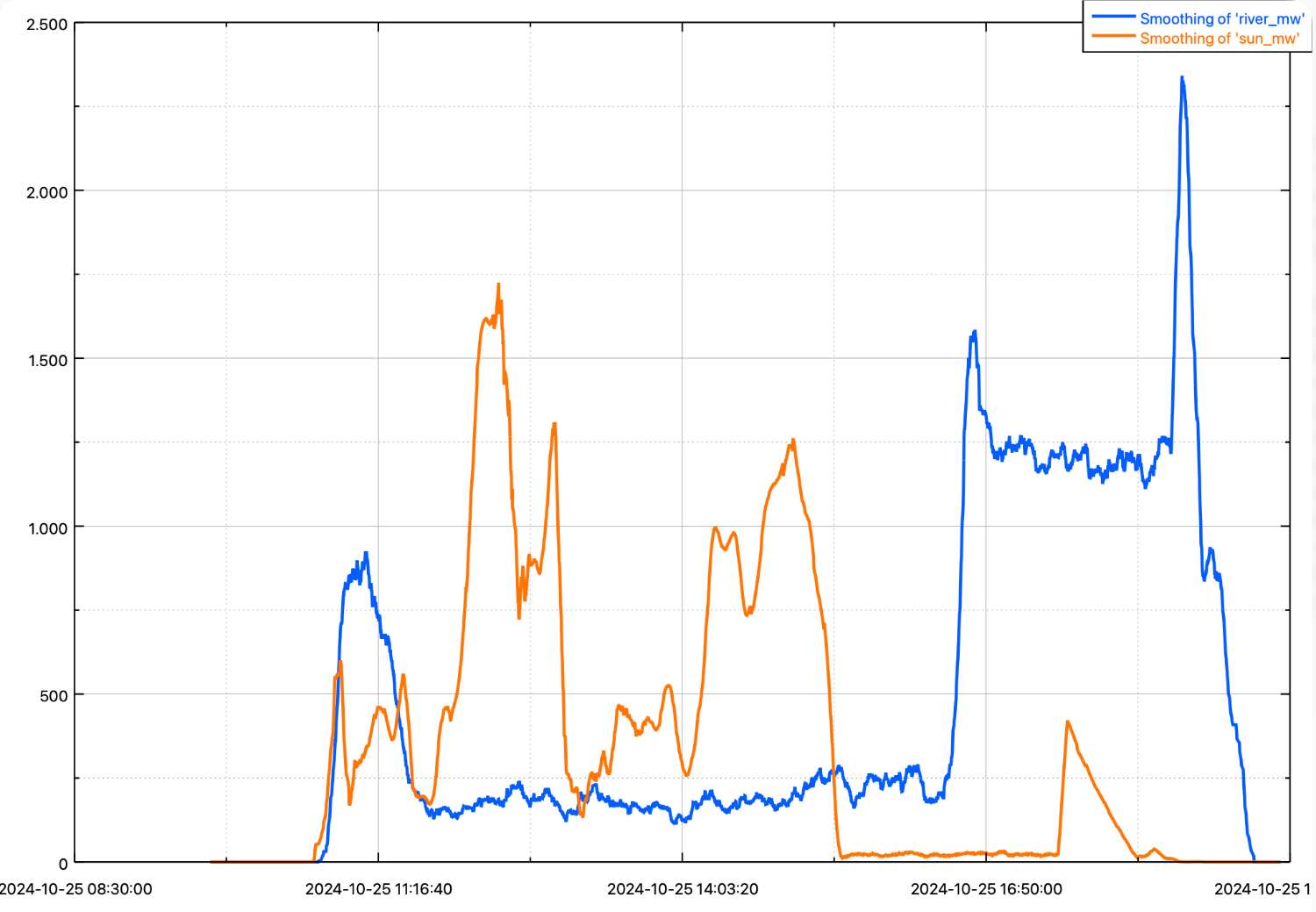
wondering about the correlation between power pulled from river and sun here (river power goes down when sun power pulls...).

maybe this is because of the charging schematic - both charging outputs (solar-powered charger and river-powered charger are connected to the battery in parallel...). worth checking river voltage, since that's more directly correlated to flow speed.


Log

Generating lighter views of content from agoras: Try out agora/lightread script (simple chronological view of content) - did this alongside the Maas :)

--> todo embed screenshots or better yet link to static tries...

Open up dataflow logs from DDW sd card:

- mount raspberry pi sd card on Mac (following this guide: https://www.jeffgeerling.com/blog/2024/mounting-ext4-linux-usb-drive-on-macos-2024/)

- copy files over

- reset permissions

- logs in ~/Desktop/pi_files/log

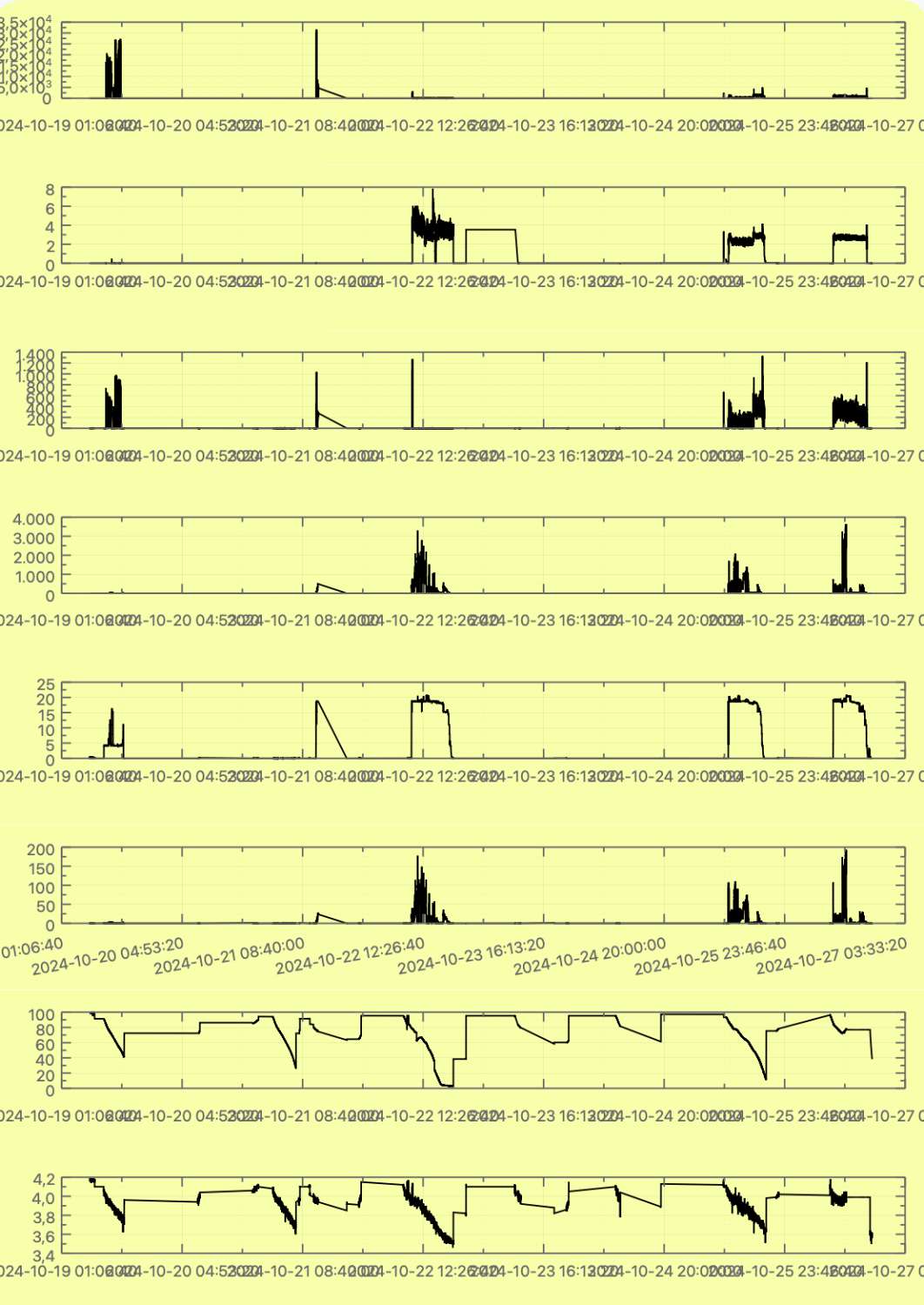
Visualise some of the power logs:

  • Process text files and convert to csv

  • Smoothing needed to visualise trend

Outline

  • shortly contextualise/position. what is it really? what's the added/unique value?

    • experiments hosting a website on a floating very-low-power waterwheel generator raft (bamboo, old bicycle tubes, and electronics)

  • the archive: overview of data collected and insights/highlights

    • websites:

    • documentary (by david)

    • power logs

      • plot these (by day, during ddw, during month-long "parked" period)

    • phone logs

      • todo also plot this

    • setup notes/guide?

  • reflections/insights/future thoughts

    • web server with constant connection via 4G network, even with optimisations built in is relatively hungry (consuming around 1W)

      • question whether we really need a whole computer/webserver running here, since anyway it needs to be tunneled via another server to be publically accessible - may make more sense to just timeshare

    • rather reuse/repurpose old android phone than purchase new mini computer+sim hat

  • resources (map of peers, "the community")

Form:

[ ] lighter weight view of agora space with positioning (since that’s the main structural logic…)

[ ] add edges (lines between nodes) to agora

What are the insights from the data collected?

Dataflow as a “grid-aware” site - being off-grid (electricity wise) - but what’s the rest of context 


26 04 25

from cerca forum to cblgh.org/articles and stumbled across their webring. (see webring and realise thats what this top nav bar of the agora is). and weathering software winter - the more interactive the

Tell 'em what you're going to tell 'em; then tell 'em; then tell 'em what you told 'em.

  
24 10 25_river and sun
  

links

https://research.radical-openness.org/

https://research.radical-openness.org/2019/how-your-shitty-portfolio-is-killing-the-environment/

https://research.radical-openness.org/2019/vaping-networks/#more-81

Resources &/ Deeper web of this more interesting links:

https://lowcarbon.software/

(Found this via permacomputing forum, built on cerca software, also used for forum.lowcarbon.software)

dataflow

https://kmaasrud.com/blog/ai-vs-shower.html

https://www.nicchan.me/blog/exploring-grid-aware-websites/

Printable permacomputing wiki:

https://bbs.permacomputing.net/thread/5/%5bshow%5d-permacomputing-wiki-to-print-7/

While listening to: https://soundcloud.com/user-202286394-991268468/folklore-of-north-west-africa

https://thentrythis.org/notes/2024/08/30/organised-atoms-at-united-downs-raceway-aka-ale-cakes-mine/

(Found this on research.tidal.computer

Battery-less android phone:

https://crackoverflow.com/docs/system_administration/containerization/turn_android_phone_to_batteryless_home_server/

Lightweight git for permacomputing:

https://git.bleu255.com/permacomputing/files.html

Nice archive!

https://archive.bleu255.com/


26 04 02

sjoerd luijten

image generator (antwerp, september 17-19)

to spend less energy

maaslab calendar

make visual/explicit what we (Maas) do

what happens (in the moment/live):

- events (calender)
- digitally (having a website)
- river (what is going on in the river)

- open up the ? of the issue (energy, data-use,...)

log of trying/doing/rehearsing process

dataflow website/document also a printable zine (just the dataflow part)

'ufene' (?) --> oefenen, oefenen

ufene, ufene

possible dates (maaswacht studio openings)

April 19/20 - April 30

May 11 - 19


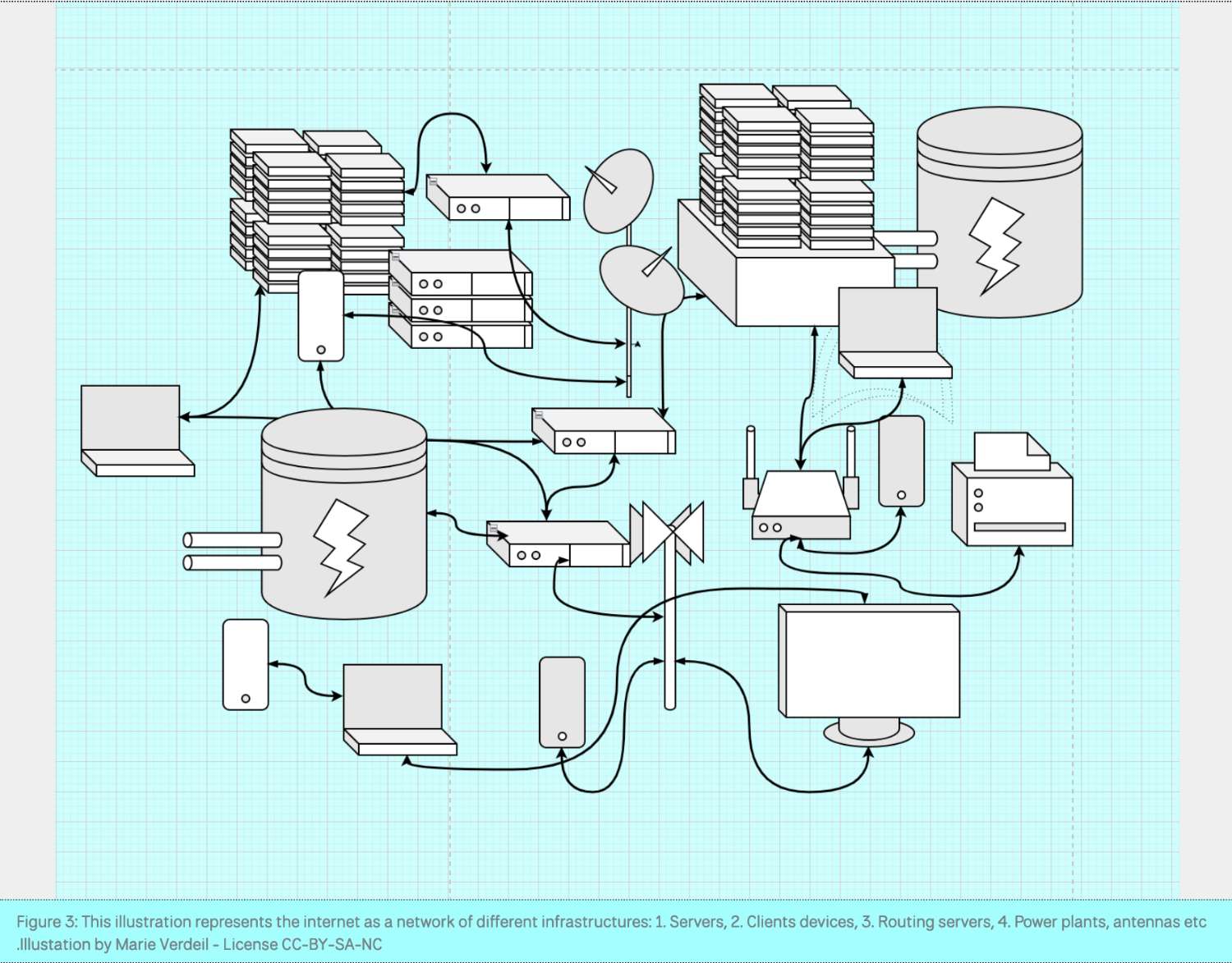
the (real) shape of the Internet


compost.party is a

repurposed smartphone

running on solar power.

it's a web server pieced

together from scraps and

pieces that were lying around

anyways. its home is the attic of

a residential apartment

building.

different inhabitants munch on

its leftovers like bacteria, slowly

de- and re-assembling its parts

and molecules, bits and bytes.


... lightweight static export of agora spaces/content?


{
  "id": "StageNode_1775110006703_88a18929cc",
  "type": "StageNode",
  "data": {
    "subspace": "stage",
    "label": "stage",
    "frozen": true
  },
  "position": {
    "x": -150,
    "y": -150
  },
  "z": 1,
  "width": 300,
  "height": 300,
  "ts": 1775110006703
}

  
{
  "id": "StageNode_1775110006703_fa2c28945e",
  "type": "StageNode",
  "data": {
    "subspace": "stage-innercircle",
    "frozen": true
  },
  "position": {
    "x": -75,
    "y": -75
  },
  "z": 2,
  "width": 150,
  "height": 150,
  "ts": 1775110006703
}


26 03 18_maaslab/dataflow branches

  • raft experiments, gatherings, sharing moments, towards workshops...

    • waterwheel listening and powering experimental situated electronic instruments

    • oscillating stick pheonomena, performance

  • music for tiny waterways / moisture music

    • Humid Organ

      - resonance with hydrological cycle installation...

    • Humid sensory web... ***

      • like the Humid Organ, above, creating a web of moisture sensitive receptors which could also be (digitally) visualised


Humid Organ as a practical, lightweight instrument that works with tiny waterways to make music. The player becomes attuned to water vapor touching the instrument; to its condensation and evaporation, these in direct correlation to sustain and release of a tones in a modular synthesiser.

Work plan:

- Exploring potential materialities of humidity-sensitive resistors (i.e. woven conductive textiles, traces of various dimensions)

  • Dataflow connection: measuring and visualising these digitally

  • Integrating these into a modified version of Open Organ


Very interesting links and experimentation:

https://www.criticalinfralab.net/experiment/mud-battery-garden/

Next ideas:

  • Propose an sharing moment for Open Organ (touch/moisture-sensitive instrument) with Extra Practice (Rotterdam)

    • Also check in with them about possible interest for collaborating?

    • Frame this as connected to Maas Lab?


26 03 18

dataflow as an object in the maaswacht studio

website content ideas:

  • a mini/lightweight view of:

    • maaslab telegram channel

    • maaswacht info/calendar

    • selected maaslab agoras

  • trace the network route (hops) from browsing device to server and clearly show the weight of the data

  • connection to place with temperature, humidity, light level, blurry camera feed...


26 03 19_dataflow continuation proposal

As a first reflection/research trajectory (10 days):

Looking critically at what Dataflow actually is/has been/was envisioned as, especially through lenses of other critical computing ideas (permacomputing, Holistic Computing Arts, crtical infrastructure, see below) and producing a written/illustrated document that reflects on this and communicates it clearly. Also gladly inviting the other minds and voices involved in this project so far to add a reflection (maybe after there is already a clearer start/proposal). I think this is a way of getting to a shared idea of where we actually are now, and then openly pondering and imagining what it could be in a way that is informed by the shared understanding.

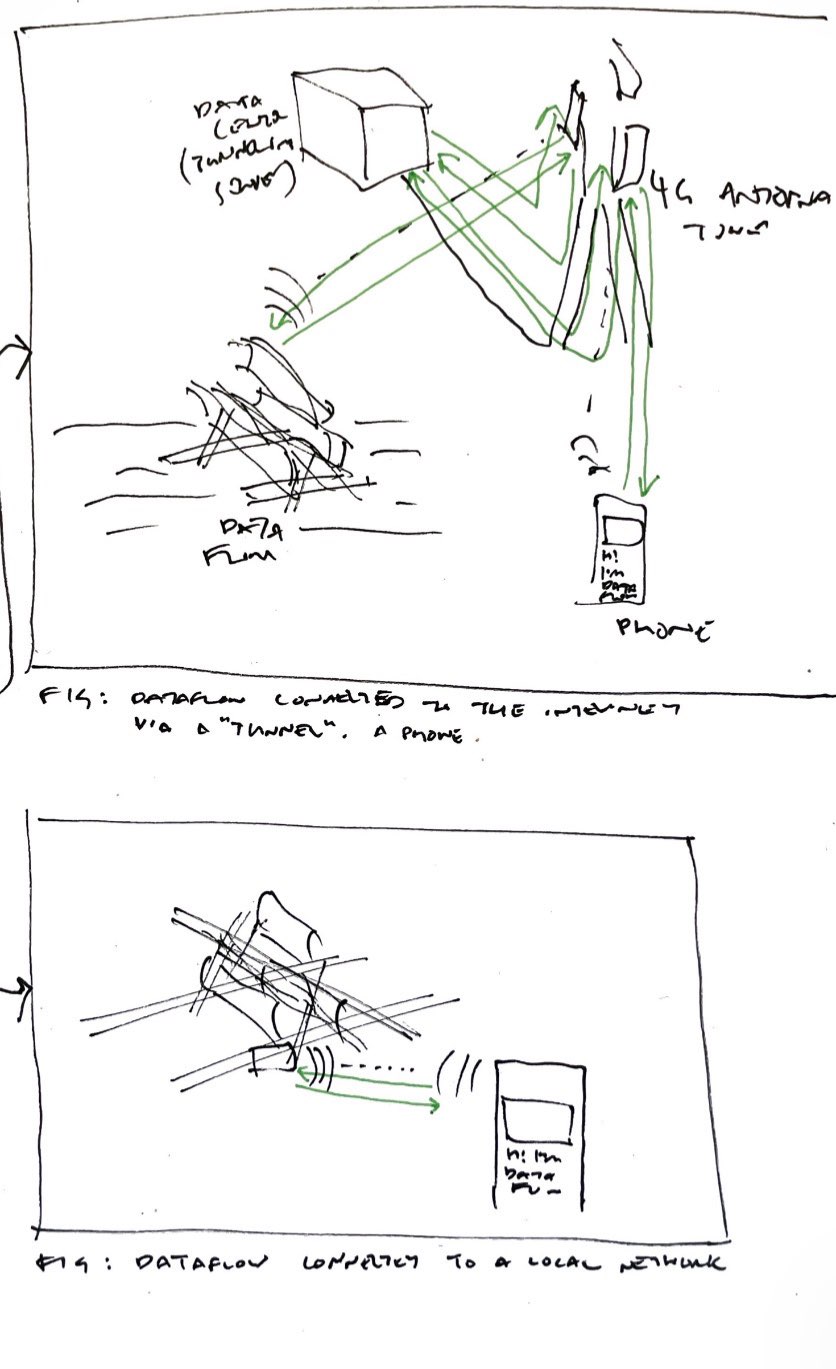
i.e. one important part for me is questioning this as just a "low power / maas-powered website", because this part is really just one node in the large network of hops before the dataflow website reaches your device (i.e. think through the hops of your device to a wlan router to a cell tower to a data centre which tunnels the connection, and then its route to this "low power" webserver - through 4G cell towers to this little dataflow with a battery and charging... In fact less energy would be used by just uploading a lightweight static website to one of these datacentres (ideally one that's powered by renewables) and cutting out half of the cell tower hops and cutting out the dataflow battery charging/discharging...

So this also as a motivation for finding other ways of sensing and sharing (i.e. situated sounding instruments)

First outcomes:

- a document (above) reflecting on dataflow
- a lightweight maaslab website aggregating the various digital communications (maaswacht info, dataflow info, ...)

Looser thoughts and imaginaries
- Dataflow touching Maaslab's digital presence - critical digital infrastructure
- experimenting with situated, water-connected systems for (different ways of sharing, engaging with, being together...)

Relevant/adjacent links:
https://permacomputing.net/
https://permacomputing.net/Holistic_Computing_Arts/
https://www.criticalinfralab.net/
https://solarprotocol.net/
http://www.node9.org/


26 04 01

proposed outcome of this first research/reflection phase is a lightweight web document about dataflow and maaslab

future situated sensory dataflow ideas:

... from waterwheel to waterweb

links:

The (real) shape of the Internet https://wiki.comphost.club/facilitator/annotated-presentation/

Critical atlas of the internet

http://internet-atlas.net/#Ch6

compost.party (community webserver on a repurposed smartphone running on solar power, was just online but currently down - low battery in berlin winter...)